
Home › Models › BYD SEALION 7 › Troubleshooting › Battery & Charging System
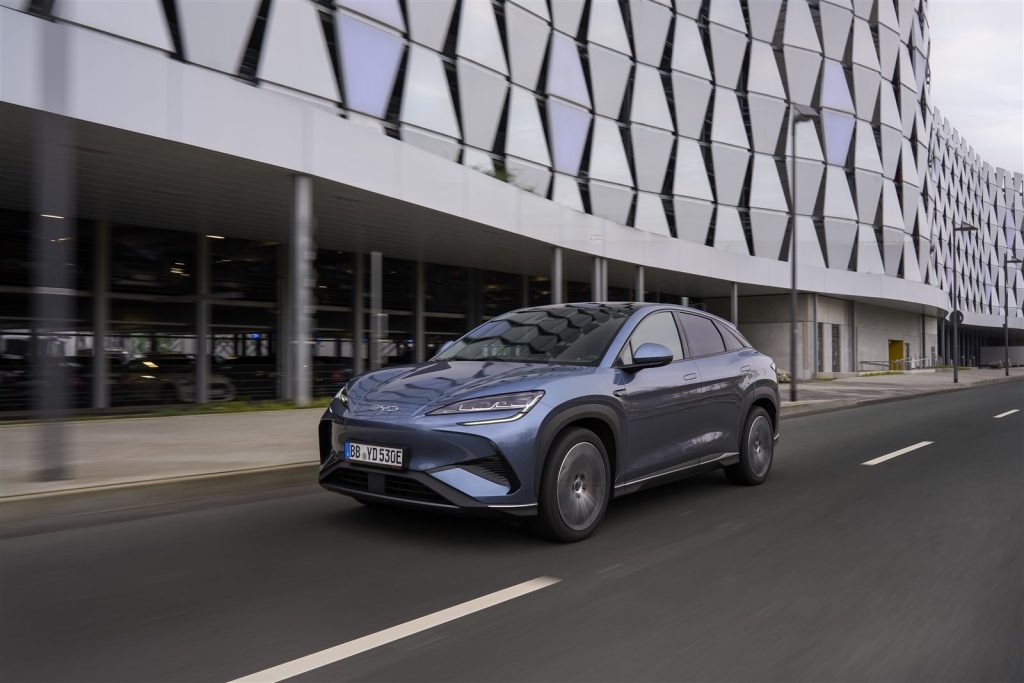
This independent guide covers the high-voltage electrical components, AC and DC charging parameters, safety precautions, and recommended maintenance for the battery pack. Please note that trim names, specifications and prices reflect a compiled dataset (October 2026) and that BYD Automotive Australia may update variants, so owners must confirm with an authorised BYD dealer or the official BYD Australia website regarding every figure. Official service/warranty page: https://bydautomotive.com.au/service-and-warranty.
Contents
- Understanding the Blade Battery Architecture
- Home Charging and AC Wallbox Operation
- Public DC Fast Charging Guidelines
- Range Expectations and Efficiency
- V2L External Power Socket Usage
- Battery Care and State of Charge Management
- High-Voltage System Safety and Diagnostics
- Frequently Asked Questions
- See Also
- Sources
Understanding the Blade Battery Architecture
The vehicle is a pure electric vehicle (BEV) that relies entirely on its high-voltage battery. Both the rear-wheel drive Premium and the all-wheel drive Performance variants in Australia utilise an 82.56 kWh BYD Blade Battery. Built on the e-Platform 3.0 Evo with Cell-to-Body (CTB) integration, the battery assembly serves as a structural component of the chassis. This pack supplies energy to a 230 kW permanent magnet synchronous rear motor on the Premium model, while the Performance variant incorporates an additional 160 kW squirrel cage induction asynchronous front motor.
When researching the Blade Battery capacity of the BYD SEALION 7, it is important to note that the 82.56 kWh rating is the sole configuration listed in the official specifications. The battery is a sealed unit containing no user-serviceable elements. For in-depth operational protocols, owners should refer to the official owner’s manual. Operating strictly as an electric vehicle, it features no exhaust system and requires no engine oil.
Home Charging and AC Wallbox Operation
Routine energy replenishment occurs via alternating current (AC) connections. The vehicle is equipped with a Type 2 AC charging port capable of an 11 kW maximum input. Owners investigating an 11 kW AC three-phase home wallbox setup for charging the BYD SEALION 7 will find that a compatible dedicated unit provides the most consistent domestic charging solution.
If a wallbox is not installed, the vehicle is supplied with a portable charging cable (mode 2) designed for standard household outlets. The 58 L front boot (frunk) storage of the BYD SEALION 7 offers a convenient, isolated space for storing charging cables away from the main interior. Any electrical upgrades to residential properties to support vehicle charging remain strictly subject to manufacturer specifications and must be completed by a licensed electrician.
Public DC Fast Charging Guidelines
Long-distance travel is supported by public fast-charging infrastructure. The vehicle is fitted with a CCS 2 DC charging port that accepts a maximum of 150 kW. Drivers evaluating the ultra-fast DC charging capabilities and CCS 2 rate for the BYD SEALION 7 can expect up to 150 kW when connected to a compatible high-output pillar.
The actual charging time for the BYD SEALION 7 experienced at a commercial station will fluctuate based on the battery’s starting state of charge, ambient temperatures, and the specific output limits of the public charger. If the vehicle repeatedly fails to initiate a DC session, owners should verify the station’s operational status first; if issues persist, consult an authorised BYD dealer to have the vehicle’s charging hardware inspected.
Range Expectations and Efficiency
Energy consumption varies according to the selected variant and driving conditions. The official WLTP range figures for the BYD SEALION 7 are 482 km for the Premium model and 456 km for the Performance model. This difference is partly due to the kerb weight, which is 2,225 kg for the Premium and 2,340 kg for the Performance. Range estimation is dynamically calculated and displayed on the 10.25-inch LCD instrumentation screen, adapting to factors such as the use of the automatic dual-zone heat pump air-conditioning.
To help the system calibrate its range predictions accurately, the manufacturer recommends performing a full charge via AC power from below 10% every three to six months. Should significant and unexplained range degradation occur, owners are advised to confirm with BYD Automotive Australia regarding potential inspection requirements.
V2L External Power Socket Usage
The vehicle’s electrical system supports bidirectional energy transfer through a V2L function. Using the supplied V2L discharge adapter, the external power socket of the BYD SEALION 7 allows the high-voltage battery to operate external equipment, such as tools or camping appliances.
Operators must ensure that connected devices do not exceed the vehicle’s maximum output limits. The adapter connects directly to the exterior charging port to deliver power. For comprehensive guidelines on safe operating loads and discharging procedures, refer to the official owner’s manual.
Battery Care and State of Charge Management
Protecting the longevity of the traction battery requires adherence to specific state-of-charge guidelines. It is advised to fully charge the power battery at least once a week. In environments where the temperature drops below 10 degrees Celsius, the battery should be charged immediately after driving while the cells are still warm.
Proper long-term storage is equally critical. If the vehicle remains unused for more than 7 days, the power battery should be maintained at a 40%-60% state of charge. For storage periods exceeding 3 months, owners must fully charge the battery and then discharge it back to the 40%-60% range every 3 months. The vehicle must be recharged promptly if the state of charge reaches 0%; damage resulting from a deep discharge is not covered. The 6-year vehicle warranty and 8-year battery warranty covering the BYD SEALION 7 stipulate that the power battery is guaranteed for 8 years or 160,000 km, with a commitment of at least 70% capacity retention.
High-Voltage System Safety and Diagnostics
The 8-in-1 electric powertrain and battery architecture utilise lethal high voltages. Throughout the vehicle’s underside and beneath the bonnet, high-voltage orange cables transport electrical current. These components must not be touched or opened by owners under any circumstances. Any maintenance, diagnostics, or repairs involving the high-voltage system must be done by an authorised BYD dealer or qualified technician.
The vehicle’s battery management software can be upgraded via over-the-air (OTA) updates using the built-in 2 GB data plan. If an error message or warning light relating to the battery or charging system appears on the 15.6-inch intelligent rotating touch screen display, drivers must immediately schedule an inspection with a certified service centre.
Frequently Asked Questions
What is the maximum DC charging rate at public stations?
The vehicle supports a maximum DC charging input of 150 kW via its CCS 2 port. Charging speeds will dynamically adjust depending on the battery’s temperature, its current state of charge, and the capability of the specific charging pillar.
Are charging cables included with the vehicle?
Yes, a portable charging cable (mode 2) is provided for use with standard household power points, and the vehicle features a Type 2 AC charging port for home wallbox or public AC connection at up to 11 kW.
What happens if the battery state of charge reaches zero?
You must recharge the vehicle promptly if the state of charge drops to 0%. Failing to do so can cause severe deep-discharge damage to the battery cells, which is explicitly excluded from the manufacturer’s warranty.
How do I use the vehicle to power external appliances?
The vehicle features a V2L function and comes with a V2L discharge adapter. By plugging this adapter into the charging port, you can supply power to standard external electrical devices.
How often should the battery be fully charged?
The manufacturer advises fully charging the power battery at least once a week. Furthermore, charging from below 10% to full via an AC connection every three to six months helps the system maintain accurate range estimations.
See Also
- BYD SEALION 7 Powertrain & Fuel Specifications
- BYD SEALION 7 Warranty & Documentation
- BYD SEALION 7 Logbook Servicing Guide
- BYD SEALION 7 Troubleshooting & Issues Hub
- BYD SEALION 7 Electric Drive Unit
Sources
- https://bydautomotive.com.au/sealion-7
- https://bydautomotive.com.au/brochures/BYD-SEALION-7-2026.pdf
- https://bydautomotive.com.au/service-and-warranty
- https://bydautomotive.com.au/public/vehicle-warranty-2026.pdf
Disclaimer: This guide is for informational purposes only. Official specifications, recall details, and warranty terms are determined by BYD Automotive Australia (EVDirect). Always consult an authorized dealer or official owner’s manual.