
Home › Models › BYD SEAL › Troubleshooting › DiPilot Driver Assistance Systems
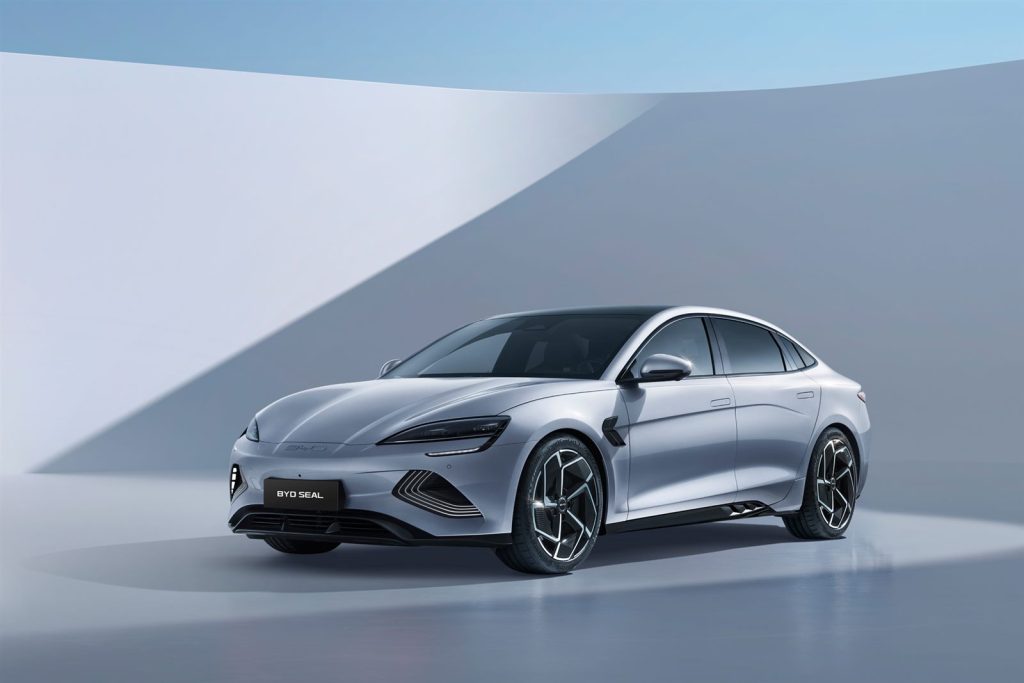
This page covers the DiPilot driver assistance systems and safety features of the BYD SEAL pure electric (BEV) sedan. It provides a comprehensive overview of the cameras, radar components, ultrasonic sensors, and passive safety systems equipped on the vehicle. This is an independent guide; for definitive information, refer to the official owner’s manual.
Note: Trim names, specifications, and pricing reflect a compiled dataset (October 2026). BYD Automotive Australia may update variants over time, so every figure must be confirmed with an authorised BYD dealer or the official BYD Australia website. When checking the BYD Seal price in the Australian market or comparing a BYD Seal driveaway price for Sydney, Melbourne, Brisbane, or Perth, buyers must verify details with a local representative. For the official service and warranty page, visit Contents
The BYD SEAL is equipped with a suite of DiPilot active safety technologies designed to monitor the road and assist the driver. The core collision avoidance system includes automatic emergency braking and predictive collision warning. These systems utilise forward-facing radar and cameras to detect vehicles and obstacles in the vehicle’s path. If a potential frontal impact is detected, the system provides a warning and can apply braking force to reduce the severity of a collision. The vehicle also features front and rear cross traffic alert with a brake function. This is designed to monitor approaching traffic from the sides when reversing or moving forward at low speeds. Due to the high-voltage architecture of the vehicle, any diagnostic work on these systems is strictly subject to manufacturer specifications. Owners must consult an authorised BYD dealer if fault warnings appear on the 10.25-inch LCD instrumentation. High-voltage orange cables must not be touched or opened by owners. For highway driving and lane management, the DiPilot suite incorporates adaptive cruise control, lane departure warning and prevention, and emergency lane keeping assist. Adaptive cruise control maintains a set distance from the vehicle ahead, while the lane keeping systems monitor lane markings to provide steering intervention if the vehicle drifts out of its lane. Traffic sign recognition is also integrated, displaying speed limits and other road signs on the head-up display and instrument cluster. When evaluating the BYD Seal Dynamic vs Premium vs Performance comparison, buyers will note that the official brochure lists the Premium and Performance variants, but does not include a Dynamic variant. The comprehensive safety systems are standard across the listed trims. For buyers researching alternative electric sedans and reading an Australian review comparing the BYD Seal to the Tesla Model 3, it is important to review the specific feature inclusions of each model. Manoeuvring the BYD SEAL, which measures 4,800 mm in length and 1,875 mm in width, is supported by a 360-degree camera system and multiple parking sensors. The vehicle features two zones of front parking sensors and four zones of rear parking sensors. Blind spot detection alerts the driver to vehicles in adjacent lanes, while the door open warning system helps prevent collisions with cyclists or other vehicles when occupants are exiting the car. Additional safety monitoring includes driver attention warning and child presence detection. The interior features a 15.6-inch intelligent rotating touch screen display which serves as the primary interface for viewing camera feeds and configuring DiPilot settings. In the event of an unavoidable collision, the BYD SEAL relies on a comprehensive passive safety setup. The cabin is protected by front, side, curtain, far-side, and rear side airbags, complemented by dual stage pretensioners for the seatbelts. The vehicle architecture is built upon BYD’s e-Platform 3.0 and e-Platform 3.0 Evo, which integrates the 82.56 kWh BYD Blade Battery directly into the chassis. This design highlights the BYD Seal cell-to-body CTB structural battery safety framework, forming a key part of the vehicle’s structural rigidity. The unladen ground clearance is 149 mm on the Premium and 145 mm on the Performance trim, further contributing to a low centre of gravity. The official BYD website displays an ANCAP safety logo for the BYD SEAL; however, it does not state a specific star rating. Consumers must check the official ancap.com.au website to confirm current safety ratings and detailed crash test reports. On the Performance variant, which adds a front squirrel cage induction asynchronous motor for an all-wheel-drive layout, the vehicle includes Intelligent Torque Adaptation Control (iTAC). This system manages traction alongside the 0-100 km/h 3.8 s acceleration time on the Performance trim, supported by ventilated and drilled front discs with fixed calipers. The proper operation of DiPilot relies on accurate data from exterior cameras, radar modules, and ultrasonic sensors. If the vehicle is involved in a collision, or if the windscreen is replaced, a BYD Seal DiPilot driver assistance sensor calibration is required. This is a highly specialised procedure that ensures the forward-facing cameras and radar units are correctly aligned. Due to the precise nature of the equipment, calibration must be performed by a qualified technician at an authorised BYD service centre. Under no circumstances should owners attempt to adjust or recalibrate the sensors themselves. Any maintenance or repair work involving the safety systems is strictly subject to manufacturer specifications. If owners notice persistent errors with the adaptive cruise control or lane assist, they should confirm with BYD Automotive Australia or their local dealer for diagnostic procedures. Furthermore, when inquiring about parts or checking order delivery times within Australia via EVDirect, owners should specify if safety-critical components are required. The electronic modules governing the DiPilot driver assistance systems are deeply integrated into the vehicle’s architecture. The new vehicle warranty covers the BYD SEAL for 6 years or 150,000 km, while the traction battery is covered for 8 years or 160,000 km. The warranty dictates that any failure to service strictly per the manufacturer’s recommendations, or the use of non-BYD genuine parts causing damage, is not covered. Unauthorised modifications, additions, or alterations to the hardware or software are strictly prohibited. Consequently, all diagnostic tests and firmware updates must be completed at an official service centre. No, sensor calibration is a highly specialised procedure that must be performed by a qualified technician using proper diagnostic equipment. Owners must consult an authorised BYD dealer for this service. The official BYD website features the ANCAP logo, but does not list a specific star rating. To review the comprehensive crash test results, verify the rating directly at ancap.com.au. A persistent warning light indicates a potential fault with the radar or camera sensors. Refer to the official owner’s manual for warning light descriptions and arrange an inspection at an authorised BYD service centre. Yes, the BYD SEAL is equipped with blind spot detection as well as front and rear cross traffic alert and brake functions to assist with visibility and collision avoidance. The official brochure details the Premium and Performance variants, which include the comprehensive suite of DiPilot features as standard equipment. Disclaimer: This guide is for informational purposes only. Official specifications, recall details, and warranty terms are determined by BYD Automotive Australia (EVDirect). Always consult an authorized dealer or official owner’s manual.
DiPilot Active Safety and Collision Avoidance
Lane Assistance and Adaptive Cruise Control
Parking, Visibility and Sensors
Passive Safety and Structural Integrity
Sensor Calibration and System Maintenance
Vehicle Warranty and Diagnostic Constraints
Frequently Asked Questions
Can I calibrate the DiPilot cameras myself after replacing the windscreen?
Where can I find the official safety rating for the BYD SEAL?
What should I do if the automatic emergency braking warning light stays on?
Does the vehicle have blind spot monitoring?
Are the DiPilot features standard on all models?
See Also
Sources