
Home › Models › BYD ATTO 3 › Troubleshooting › Brake System & Regeneration
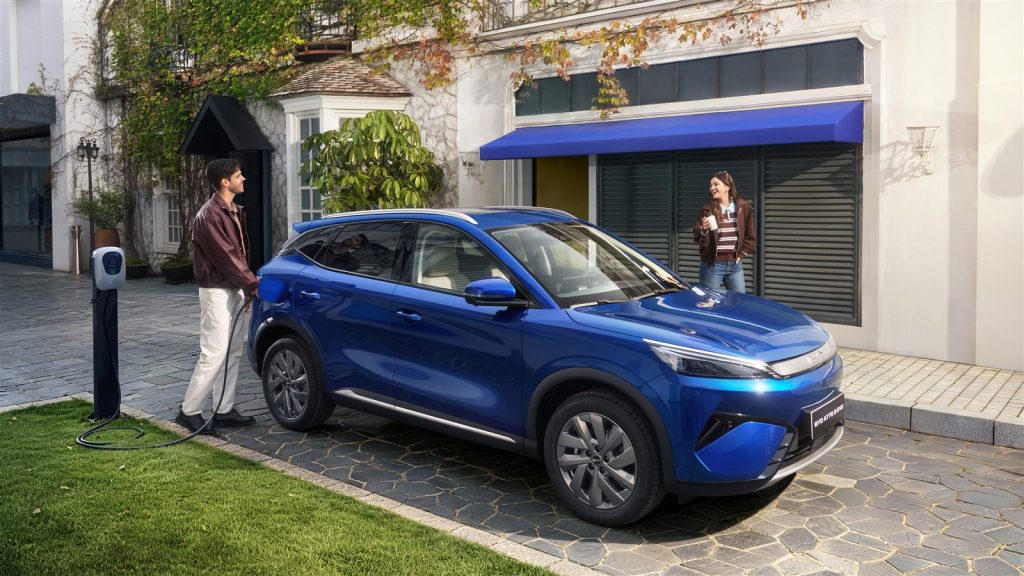
This independent reference guide explores the BYD ATTO 3 brake system, friction components, and regenerative braking features. It covers the mechanical disc brakes, regenerative modes, electronic parking brake (EPB), and related maintenance topics for this pure electric vehicle (BEV). Please note that trim names, specifications, and prices reflect a compiled dataset (October 2026) and that BYD Automotive Australia may update variants, so every figure must be confirmed with an authorised BYD dealer or the official BYD Australia website. The official service and warranty page is available at https://bydautomotive.com.au/service-and-warranty. This page provides a general reference only, and any detail regarding components, capacities, or limits is subject to manufacturer specifications.
Contents
- Regenerative Braking System
- Friction Brakes and Hardware Components
- Electronic Parking Brake (EPB)
- Brake Fluid and Scheduled Maintenance
- Active Safety Systems
- Frequently Asked Questions
- See Also
- Sources
Regenerative Braking System
The pure electric powertrain of the BYD ATTO 3 features a regenerative braking system that captures kinetic energy during deceleration. Drivers can select between different BYD ATTO 3 regenerative braking settings, specifically the Standard and High modes. This energy recovery system works in tandem with the BYD Blade Battery.
Utilising regenerative braking reduces reliance on the mechanical friction brakes. When reviewing the BYD ATTO 3 WLTP range in Australia, the official driving range is 345 km for the Essential, and up to 510 km on the EVO Premium. For those researching the BYD ATTO 3 Blade battery lifespan and potential degradation, the traction battery is supported by an 8-year or 160,000 km warranty, with a guarantee of at least 70% battery capacity retention. Always refer to the official owner’s manual for instructions on operating the regenerative settings.
Friction Brakes and Hardware Components
The BYD ATTO 3 relies on a traditional friction braking system to bring the vehicle to a complete stop. The braking hardware includes ventilated discs at the front and solid rear discs for standard variants. The EVO variants are equipped with ventilated discs at both the front and rear. These components operate with the MacPherson strut front and multi-link rear chassis setup, bringing the vehicle, which has a kerb weight ranging from 1,680 kg to 1,880 kg, to a halt.
When undertaking a BYD ATTO 3 standard versus extended range comparison, note that braking hardware can differ based on the specific variant. Factors influencing BYD ATTO 3 brake pad wear and disc replacement schedules include individual driving conditions and the use of the regenerative braking system. Work on the braking system is dangerous and must be done by a qualified technician or an authorised BYD dealer.
Electronic Parking Brake (EPB)
The BYD ATTO 3 is equipped with an electronic parking brake (EPB), securing the vehicle when stationary. This modern system completely replaces a traditional mechanical handbrake lever. The EPB is designed to hold the vehicle’s full gross vehicle mass, which reaches 2,410 kg in the EVO Premium variant. It also provides holding power when utilising the maximum braked towing capacity of up to 1,500 kg (on the EVO Premium). Exact operating instructions and safety warnings regarding the EPB are found in the official documentation, and owners should confirm with BYD Automotive Australia if they require clarification.
Brake Fluid and Scheduled Maintenance
Brake fluid is a critical component of the vehicle’s braking system. According to the BYD Warranty and Service Handbook 2026, replacing the brake fluid is an item strictly recorded on the standard service record for EV series vehicles. Standard services are scheduled every 20,000 km or 12 months, whichever comes first, up to 120,000 km or 72 months.
When inquiring about pricing for the BYD ATTO 3 in Australia, prospective owners should also account for long-term wear items such as brake pads, brake linings, and brake fluid. Items like brake linings are considered wear items, and a charge may be made for their replacement. Even for buyers who choose to order a BYD ATTO 3 online through EVDirect, all brake-related maintenance, including fluid flushes, must be carried out by trained professionals. High-voltage orange cables must not be touched or opened by owners. For exact maintenance intervals of specific components, consult an authorised BYD dealer.
Active Safety Systems
The braking hardware on the BYD ATTO 3 operates in conjunction with several advanced driver assistance systems (ADAS). These include the Anti-lock Braking System (ABS), electronic stability control, and automatic emergency braking. Additionally, the vehicle features rear cross traffic alert and brake, forward collision warning, and hill descent control. The ATTO 3 EVO Premium variant also includes front cross traffic alert and brake.
Any repair, realignment, or calibration of these safety systems must be done by an authorised BYD dealer.
Frequently Asked Questions
What are the BYD ATTO 3 regenerative braking settings?
The BYD ATTO 3 offers Standard and High regenerative braking settings. You must refer to the official owner’s manual to understand how to operate these modes effectively.
How often should the brake fluid be replaced?
Replacing brake fluid is an item strictly recorded on the standard service record for EV series vehicles. You must consult an authorised BYD dealer for the specific intervals strictly relevant to your vehicle and driving history.
Does the BYD ATTO 3 standard versus extended range comparison show different brakes?
The brake hardware differs across the range. For example, standard ATTO 3 variants feature solid rear discs, whereas ATTO 3 EVO variants are equipped with ventilated discs front and rear.
What is the BYD ATTO 3 DC fast charging speed using a CCS2 connector?
The standard ATTO 3 Essential reaches 70 kW, while the Premium model allows up to 88 kW. The ATTO 3 EVO variants offer higher rates, reaching 110 kW on the Dynamic and 220 kW on the Premium.
Can I replace the brake pads on my BYD ATTO 3 myself?
No, working on the high-voltage electric vehicle brake system is dangerous. Any brake pad or disc replacement must be completed by an authorised BYD dealer or qualified technician.
See Also
- BYD ATTO 3 Review & Overview
- BYD ATTO 3 Logbook Servicing Guide
- BYD ATTO 3 Powertrain & Fuel Specifications
- BYD ATTO 3 Spare Parts & VIN Sourcing
- BYD ATTO 3 Troubleshooting & Issues Hub
Sources
- https://bydautomotive.com.au/atto-3
- https://bydautomotive.com.au/brochures/BYD-ATTO-3-EVO.pdf
- https://bydautomotive.com.au/service-and-warranty
- https://bydautomotive.com.au/public/vehicle-warranty-2026.pdf
Disclaimer: This guide is for informational purposes only. Official specifications, recall details, and warranty terms are determined by BYD Automotive Australia (EVDirect). Always consult an authorized dealer or official owner’s manual.