
Home › Models › BYD DOLPHIN › Troubleshooting › Battery & Charging System
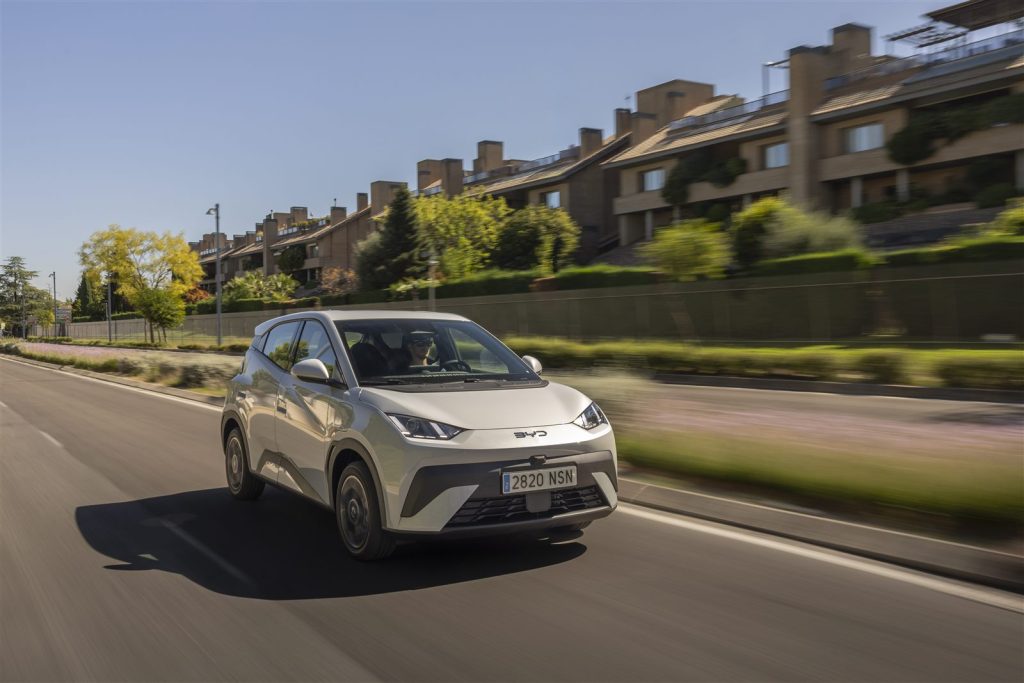
This page covers the high-voltage battery, charging hardware, vehicle-to-load functions, and 12-volt auxiliary electrical components of the BYD DOLPHIN. It serves as an independent guide focusing on the pure electric (BEV) architecture. Please note that trim names, specifications and prices reflect a compiled dataset (October 2026). BYD Automotive Australia may update variants over time, so every figure must be confirmed with an authorised BYD dealer or the official BYD Australia website. Official service and warranty documentation is accessible at https://bydautomotive.com.au/service-and-warranty.
The BYD DOLPHIN relies entirely on electric propulsion through a permanent magnet synchronous motor driving the front wheels. It does not have a petrol engine, exhaust, or spark plugs. All inspection, maintenance, and diagnostic work on the high-voltage system is subject to manufacturer specifications and must be done by an authorised BYD dealer or qualified technician. Owners must never touch or open the high-voltage orange cables.
Contents
- Battery Capacity, Range and Powertrain
- DC Fast Charging and AC Home Charging
- Battery Care and Long-Term Storage
- Vehicle-to-Load (V2L) Operation
- Thermal Management System
- 12V Auxiliary Battery and Electronics
- Frequently Asked Questions
- See Also
- Sources
Battery Capacity, Range and Powertrain
The BYD DOLPHIN is powered by the BYD Blade Battery, supplying energy to a front-mounted permanent magnet synchronous motor. When evaluating the BYD Dolphin battery capacity of 44.9 kWh versus the larger 60.48 kWh option, buyers will find that the two available variants offer different outputs and ranges.
The Essential variant incorporates the 44.9 kWh battery. This configuration powers a 70 kW motor producing 180 Nm of torque, achieving a 0-100 km/h time of 12.3 seconds. Its energy reserves provide a WLTP range of 340 km (NEDC 410 km). In contrast, the Premium variant is equipped with the larger 60.48 kWh battery. This supplies a more powerful 150 kW motor delivering 310 Nm of torque, which reduces the 0-100 km/h time to 7 seconds. The Premium variant delivers a longer WLTP range of 427 km (NEDC 490 km).
Drivers planning a highway range test in a BYD Dolphin from Sydney to Canberra must factor in their variant’s specific capacity. Both variants feature regenerative braking.
DC Fast Charging and AC Home Charging
Recharging the high-voltage battery is facilitated through dual charging ports. For standard home or destination charging, the vehicle features a Type 2 AC charging port and includes a mode 2 portable charging cable. Any calculations when estimating the BYD Dolphin home charging cost per 100km in Australia rely on the specific local electricity tariff and the variant’s rated energy consumption.
For rapid top-ups during long journeys, the vehicle uses a CCS 2 DC charging port. The DC fast charging rate for the BYD Dolphin via the CCS2 port reaches 60 kW or 80 kW, depending entirely on the variant selected. The standard range Essential variant is capped at 60 kW, whereas the extended range Premium variant supports up to 80 kW of DC charging input. Any physical damage to the charging ports must be evaluated by an authorised BYD dealer. Furthermore, the emergency charging and discharging devices carry a distinct 12-month warranty, separate from the primary vehicle coverage.
Battery Care and Long-Term Storage
Maintaining the BYD Blade Battery requires following the guidelines detailed in the Warranty and Service Handbook. To support optimal range estimation, the manufacturer recommends fully charging the vehicle at least once a week. Additionally, conducting a full charge via AC charging from below 10% every three to six months aids the battery management system in accurately calibrating the state of charge.
If the BYD DOLPHIN will remain unused for more than seven days, owners should refer to the official owner’s manual for proper storage procedures. The official guidance states that the power battery should be kept at a 40% to 60% state of charge during short periods of inactivity. If the vehicle is unused for more than three months, the battery must be fully charged and then discharged back to 40% to 60% every three months. Owners must recharge the battery promptly if the state of charge drops to 0%, as damage resulting from a failure to do so is explicitly excluded from warranty coverage.
Vehicle-to-Load (V2L) Operation
Both the Essential and Premium variants include a Vehicle-to-Load (V2L) function and are supplied with a V2L discharge adapter. This system enables the traction battery to supply power to external electrical devices.
When using the BYD Dolphin V2L camping adapter to run household appliances, operators must ensure that the total power draw remains within the adapter’s rated limits. For any queries regarding the compatibility of external equipment, always confirm with BYD Automotive Australia or consult an authorised BYD dealer.
Thermal Management System
To maintain efficiency in varying environmental conditions, the vehicle incorporates an advanced thermal management system. For detailed information regarding the BYD Dolphin battery thermal management, heat pump operation, and overall system behaviour, refer to the official owner’s manual or consult an authorised BYD dealer.
In cold climates, the manufacturer advises charging the vehicle immediately after use when temperatures fall below 10 degrees Celsius. During scheduled maintenance visits, technicians will address necessary items. The official maintenance record for the EV series includes replacing the e-motor controller coolant; however, the interval for this specific item must be confirmed with an authorised BYD dealer.
12V Auxiliary Battery and Electronics
Beyond the high-voltage traction battery, the BYD DOLPHIN uses a 12-volt lead-acid starting battery. This supports features such as the 12.8-inch intelligent rotating touchscreen, the 5-inch digital instrument panel, and the suite of driver assistance systems.
The 12-volt starting battery is covered by a 12-month or 20,000 km warranty. Owners attempting to identify the BYD Dolphin 12V battery flat jump start lead connection points must refer to the official owner’s manual before proceeding. Any work involving the vehicle’s electrical modules is subject to manufacturer specifications.
Inside the cabin, the Premium variant features a mobile phone wireless charging pad. If an occupant suspects a wireless phone charging pad overheat issue in their BYD Dolphin, they must remove the device and consult an authorised BYD dealer.
Frequently Asked Questions
What is the official warranty coverage for the high-voltage battery?
The BYD Blade Battery and drive unit are covered for 8 years or 160,000 km, whichever occurs first, with a guarantee of at least 70% capacity retention. All warranty claims are subject to manufacturer specifications.
How often does the BYD DOLPHIN require servicing?
Scheduled maintenance is due every 20,000 km or 12 months, whichever comes first. The specific items addressed during these visits, including any fluid replacements, must be confirmed with an authorised BYD dealer.
Can I repair a damaged high-voltage charging cable myself?
No. High-voltage orange cables and charging hardware must not be touched or opened by owners. Any repairs must be done by an authorised BYD dealer or qualified technician.
What should I do if the battery reaches 0% state of charge?
The vehicle must be recharged promptly. The manufacturer explicitly notes that damage caused by leaving the battery at 0% is not covered by the warranty.
Who can assist with over-the-air (OTA) updates or BYD digital key issues?
For any persistent faults with software systems, connectivity, or the digital key, always confirm with BYD Automotive Australia or book an inspection with an authorised BYD dealer.
See Also
- BYD DOLPHIN Powertrain & Fuel Specifications
- BYD DOLPHIN Spare Parts & VIN Sourcing
- BYD DOLPHIN Thermal Management & Cabin Climate
- BYD DOLPHIN 12V Auxiliary Electrical System
- BYD DOLPHIN Troubleshooting & Issues Hub
Sources
- https://bydautomotive.com.au/dolphin
- https://bydautomotive.com.au/brochures/BYD-DOLPHIN-2025.pdf
- https://bydautomotive.com.au/service-and-warranty
- https://bydautomotive.com.au/public/vehicle-warranty-2026.pdf
Disclaimer: This guide is for informational purposes only. Official specifications, recall details, and warranty terms are determined by BYD Automotive Australia (EVDirect). Always consult an authorized dealer or official owner’s manual.