
Home › Models › BYD ATTO 3 › Troubleshooting › Battery & Charging System
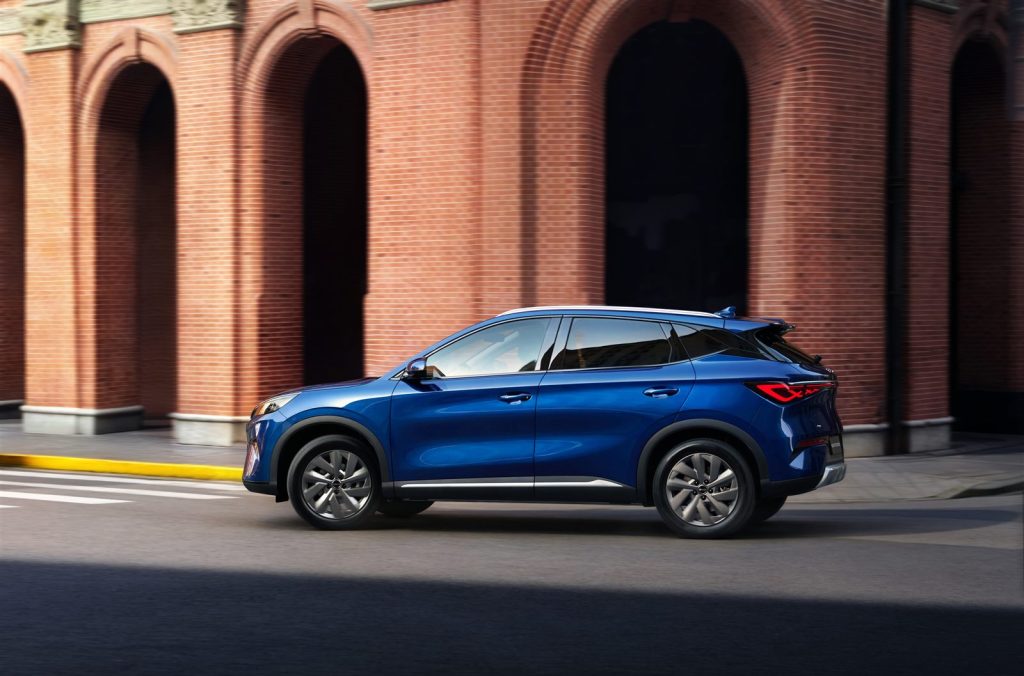
This page outlines the battery architecture and charging system for the front-wheel drive BYD ATTO 3 in Australia, covering the BYD Blade Battery, charging procedures, and 12V electrical components. The trim names, specifications, and data presented here reflect a compiled dataset (October 2026). BYD Automotive Australia may update variants at any time, so every figure must be confirmed with an authorised BYD dealer or the official BYD Australia website. For official warranty details, please visit the official service and warranty page: https://bydautomotive.com.au/service-and-warranty.
As an independent overview, this page provides basic factual data. All maintenance must remain subject to manufacturer specifications. High-voltage systems require specialist qualifications, and any advanced diagnostics or repairs must be completed by a qualified technician or an authorised BYD dealer.
Contents
- Battery Specifications and Architecture
- AC and DC Charging Systems
- Vehicle-to-Load (V2L) Operation
- High-Voltage Safety and Care
- 12V Auxiliary System
- Frequently Asked Questions
- See Also
- Sources
Battery Specifications and Architecture
The BYD ATTO 3 is a pure electric vehicle (BEV) utilising the BYD Blade Battery. When looking at a BYD ATTO 3 standard versus extended range comparison, the energy capacity varies between variants. The Essential trim features a 49.92 kWh battery with a WLTP driving range of 345 km, whereas the Premium trim offers a 60.48 kWh battery for a 420 km WLTP range.
For the BYD ATTO 3 EVO series, the Dynamic variant contains a 60.48 kWh battery (420 km WLTP driving range) operating on a 400 V electrical architecture. The EVO Premium trim provides a larger 74.88 kWh capacity (510 km WLTP driving range) and an 800 V electrical architecture. These figures reflect test environments; actual real world highway range against WLTP for Australia will vary based on speed, load, and ambient conditions. Any questions concerning BYD ATTO 3 Blade battery lifespan and degradation over time should be directed to a service centre.
AC and DC Charging Systems
Charging the BYD ATTO 3 relies on a standard Type 2 port for alternating current (AC) and a CCS 2 port for direct current (DC) fast charging. For home replenishment, the EVO Dynamic accepts up to 7 kW of AC charging, while the EVO Premium can accept up to 11 kW. Owners planning a home wallbox charger installation for 7 kW or 11 kW capacity must consult a licensed electrician and refer to the official owner’s manual for site requirements. A portable charging cable (mode 2) is also supplied for basic power access.
When using a public charging network, the DC fast charging speed for the BYD ATTO 3 via the CCS 2 port depends on the model trim. The standard ATTO 3 accepts 70 kW (Essential) or 88 kW (Premium). The EVO variants accommodate higher speeds, with the Dynamic trim reaching up to 110 kW and the Premium trim up to 220 kW. Under optimal conditions, the EVO models can complete a 0-80% DC charge in 41 minutes (Dynamic) or 30 minutes (Premium). If the charging cable cannot be removed after a session, owners must refer to the official owner’s manual for instructions on the charging port lock release override.
Vehicle-to-Load (V2L) Operation
The BYD ATTO 3 includes a V2L function, allowing the main traction battery to discharge energy via a provided V2L discharge adapter. The vehicle-to-load (V2L) power output for the BYD ATTO 3 is rated at a maximum capacity of 3.3 kW. The emergency discharging device (discharge connection device) is covered by a 12-month warranty. Users must ensure that connected devices do not exceed the 3.3 kW limit and must consult an authorised BYD dealer for any system faults.
High-Voltage Safety and Care
The traction battery is supported by an 8 year or 160,000 km traction battery warranty coverage (whichever occurs first), which guarantees at least 70% capacity retention. High-voltage orange cables and related components must not be touched or opened by owners; all related maintenance must be done by an authorised BYD dealer or qualified technician.
To maintain battery health, the warranty handbook outlines specific care guidelines. The power battery should be kept at a 40%-60% state of charge if the vehicle is left unused for more than 7 days. If stored for more than 3 months, it should be fully charged and then discharged back to 40%-60% every 3 months. The vehicle must be recharged promptly if the state of charge drops to 0%, as damage from failing to do so is not covered. BYD recommends fully charging the vehicle at least once a week. Furthermore, performing a full charge from below 10% via AC charging every three to six months aids range estimation accuracy. In ambient temperatures below 10 degrees Celsius, it is advised to charge right after use.
12V Auxiliary System
Beyond the traction battery, the vehicle features a lead acid starting (12V) battery. This 12V battery is covered by a 12 month or 20,000 km warranty. If an owner encounters a 12V auxiliary battery drain or flat battery, or issues with smart key fob transmitter batteries, owners must refer to the official owner’s manual or confirm with BYD Automotive Australia. Replacement of the 12V unit must be completed by a qualified technician.
Frequently Asked Questions
What is the traction battery warranty on the BYD ATTO 3?
The traction battery is covered for 8 years or 160,000 km, whichever occurs first. This includes a guarantee of at least 70% capacity retention, subject to correct maintenance and charging procedures.
How do I request a battery health check?
For an official BYD ATTO 3 state of health SOH battery check, owners must consult an authorised BYD dealer.
Why won’t the charging cable unlock from the port?
If the charging port lock fails to release after a charging session, refer to the official owner’s manual for instructions regarding the charging port lock release override.
Can the BYD ATTO 3 power my home appliances?
Yes, the vehicle features a V2L function that can discharge energy through a V2L discharge adapter. It supports a maximum capacity of 3.3 kW.
How should the vehicle be charged if left unused?
If the BYD ATTO 3 is unused for more than 7 days, the battery should be kept between 40% and 60% state of charge. Prolonged storage over 3 months requires a full charge followed by a discharge back to the 40%-60% range every 3 months.
See Also
- BYD ATTO 3 Review & Overview
- BYD ATTO 3 Warranty & Documentation
- BYD ATTO 3 Logbook Servicing Guide
- BYD ATTO 3 Powertrain & Fuel Specifications
- BYD ATTO 3 12V Auxiliary Electrical System
- BYD ATTO 3 Troubleshooting & Issues Hub
Sources
- https://bydautomotive.com.au/atto-3
- https://bydautomotive.com.au/brochures/BYD-ATTO-3-EVO.pdf
- https://bydautomotive.com.au/service-and-warranty
- https://bydautomotive.com.au/public/vehicle-warranty-2026.pdf
Disclaimer: This guide is for informational purposes only. Official specifications, recall details, and warranty terms are determined by BYD Automotive Australia (EVDirect). Always consult an authorized dealer or official owner’s manual.